A Visit to Camelot Auction

This is a relatively new aspect of the equine industry that I am exploring and I appreciate all feedback and comments you may have about the topic.
For the past year or so, I’ve had my eye on the Camelot Sales Auction horse sale results. I read Fugly Horse of the Day and her Washington (state) auction reports have piqued my interest in our local sales. Camelot is located in Cranbury, NJ.
This summer, I attended the auction a few times, visiting both the auction ring and the holding pens. All horses have shelter, feed, and unlimited hay and water. They are bedded on shavings and can lie down to rest. One night, I saw a tall, handsome grey warmblood type. This gelding knew his stuff, changing leads and taking jumps with casual grace. He sold for about $2,000. Another night, I saw a pinto pony sell for $750 but he looked like he was worth his weight in gold; he could jump the moon and was as game as could be.
The folks who bought these horses had a good eye for horseflesh and took home some quality animals. These horses were sound, attractive, and well-trained. Why are horses sold at public auction instead of through a private sale? An auction can be a good way to assess the market value of a horse. The horses are sent to auction for so many reasons, from an owner’s divorce to a retired lesson horse to a person who cannot afford his rent. With people tightening their financial belts and cutting back on luxuries, the horse population is undergoing big changes. Factors as basic as the time of year can lead to increased horses at auction in the wintertime due to the increased cost of feeding a horse. People who could afford to keep multiple horses a few years ago are struggling to keep one or two now. Some are getting out of the business completely. A barometer of the climate can be seen in the decline of public auction prices, all the way from the elite Thoroughbred sales to the local riding horse auctions.
At the lower end of the market, there is the added element of the feedlot buyer. Some sellers create a reserve price and if the horse is an RNA (reserve not attained), the seller takes the horse back. Horses without a reserve run the risk of being sent to slaughter. If there are no bids over the going rate for horsemeat, a horse can be sold for slaughter at a public auction.
The question of equine slaughter is a major hot-button topic among horsemen. I don’t know the answer but I’m doing my best to learn more about the subject. Some see equine slaughter as a necessary evil and as a means to control the horse population. Some see horses as livestock and find equine slaughter no more disturbing than the slaughter of cattle. Some see it as inhumane. Some see it as an end that is kinder than years of neglect.
As is the case with any controversial topic, it is quite difficult to get the whole story from either side. Slaughter is not the same as euthanasia, nor is it the same as rendering. At the heart of the debate is the actual treatment which the horses receive both en route to the plant and at the plant itself. Since 2007, slaughter plants in the United States have all been shut down so horses are now shipped to Canada or Mexico. A cursory Google search will provide some of the details of horse slaughter, but be warned, the videos and photos are quite graphic.
Due to the recent decrease in private horse buyers, there appears to be an increase in the number of horses sold at public auction being sold for slaughter. Within the past few months, a network of horse rescue groups have rallied around some large auctions, including New Jersey’s Camelot, and made an attempt to find a home for every horse intended for slaughter and relocate them to rescue groups, foster homes, or private owners.
Each week, the descriptions and photos of every available feedlot horse are posted online and distributed across the online horse community. For the past few months, the number of horses getting purchased from Camelot is high: virtually every horse has been privately sold/adopted from the feedlot. A lot of questions have been raised about these horses. Where do these horses come from? Who is benefiting from this process? What exactly are people rescuing? What happens to the horses who are rescued but have chronic health or behavioral issues? How long can this adoption streak keep up?
My mother, a friend, and I headed to Camelot last week to photograph available horses the morning after the auction. As a horse photographer, I’ve learned that a good photo of a horse can be what gets him a home. I figured that the more photos people can see of the horses, the better they can see conformation and personality.
From a photographic standpoint, I had to break all my usual rules in order to get the shots. Because the horses are close-up and indoors, I ditched my trusty telephoto lens and natural light and instead shot with a wide angle zoom lens and a speedlight (flash).
The process took about 45 minutes. The proprietor was courteous and had one of his assistants help us find all the horses on our list. Many auction proprietors do not allow post-auction purchases so we are fortunate to have this courtesy available to us in New Jersey. We walked from pen to pen, and eventually all 35 horses were photographed. It was a quiet morning, the only ruckus came from a stall where a miniature horse stallion was calling to potential girlfriends. Horses rested, munched on hay, or watched us. Some were shy, nervously walking away and some were friendly, nosing us curiously.
Only when I got home and began to edit the photos did the horses’ stories spring to life. I began to match up the hip numbers with the descriptions…
“Belgian Draft Mare, 16.2 hh, 15 yrs., droopy ears, looked ‘sad’, picked up feet. Purportedly exposed to Mammoth Jack. So could be pregnant for a Mammoth Mule.”
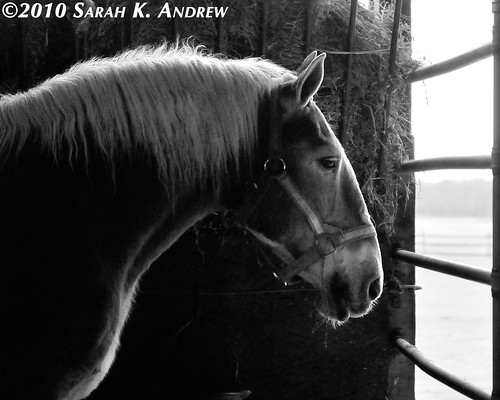
“Bay Pony Mare, 14 hh, 4 yrs old, a little head shy in the pen, Green under saddle, probably never ridden before tonite . . . . $150.00 NOT FOR A BEGINNER.”
“Palomino Gelding, 15.2 hh, 5 yrs old, looked gaited. Ridden thru, not much info. $225.00”

“Bay mare, Looks like a mule, but possible illegible lip tattoo (or pigment) maybe Standardbred if NOT a mule, 16 hh. 15 yrs, let thru, very, very thin – -we’re talking about 200+ lbs. . .. $150.00”

“Palomino Mare, 15.3 hh, 15 yrs., Very nervous/worried, but cute. Was a backyard mare, people ran out of money, led thru quiet but said to be broke to ride . . $100”
“Sorrel/roan Grade/App Gelding with an enormously swayed back. Led thru, but is supposed to be a games horse, intermediate+ rider . Find a Saddle for this guy! . . . $100.00”

“Very, Very thin Black/white pinto Gelding. 6 yrsl, 16 hh, went thru very quickly, think the price was $100.00 – -just led thru.”

“Mule – Belgian Draft-X, Mare, 16.1 hh, they didn’t announce age, was worried in the pen, picked up her feet. Snotty nose – – from Tenn., led thru but announced that she rode and drove. A pretty liver chestnut color . . . . $450.00”

I posted the photos online on Thursday night. By the weekend, every horse had been purchased to be sent to a private home or to a rescue.
Paris Ride 7: Little Miss Perfect

Thursday, 1/28/10
The days of unfrozen ground in New Jersey in January are few and far between. You have to take advantage of them when they happen. The outdoor arena where I ride Paris drains very well and is pretty good for riding, but part of it stays frozen unless we get a few mild days in a row. Fortunately, we had a streak of “nice” days when the temperatures floated above freezing and I was able to use the entire arena to ride Paris- hooray!
Paris was in high spirits and I was glad I longed her when I saw her land a few bucks that would make the immortal Midnight proud. After her merrymaking, she settled down to work and was great for the rest of the afternoon. Our ride was simple for Paris since I was working on my own position. This mare is so well-trained that my only concern is my riding getting in her way. Little Miss Perfect is the best horse for me right now because I can truly concentrate on my riding. The better I ride, the better she rides.
A respected friend saw some photos of me riding and she suggested that I work on allowing my upper arms to hang instead of flexing them. I needed to drop my arms and stop using my biceps to control the reins. If I was able to drop my upper arms and relax the muscles, I could use my entire arm more softly and effectively.
I am cursed with short arms so this work is more difficult for me than it is for my orangutan-armed colleagues. It’s a slow process, but I’m learning. Check out the difference between how I braced my arms with Alibar and how I’ve lifted and softened my hands with Paris. Baby steps!


Paris Ride 6: Nunn Finer

Saturday, 1/23/10
I’ve got to rave about some of the tack I got over the holidays. The Nunn Finer Piaffe Dressage Girth is fantastic! I bought it at Horseman’s Outlet– Merry Christmas to me :^) It is well-made and the padding is generous. The angled straps and anatomic shape seem to be comfortable for Paris and the rings aid in a secure fit without pinching or girthiness. My parents bought me a Fleeceworks FXK dressage pad for Christmas and it is fantastic! It feels great to ride a mare with nice tack that fits her well.
Today’s ride was shorter than I wanted, but we did get to ride outside once again. I longed Paris for a few minutes and rode her at the walk and trot. The ground was frozen in about half the arena but we stayed in the unfrozen part and she felt fine. Her feet are adjusting nicely to being barefoot. Paris was responsive even with a lot of distractions around her. I can’t wait to ride again!

Paris Ride 5: I Love Paris

Thursday, 1/21/10
Paris had her farrier visit today. We pulled Paris’ shoes and are going to try her barefoot over the rest of the winter. Once she is jumping and working more, her shoes will go back on. The ground was about half unfrozen so I worked her outdoors- hooray! I longed her to let her get the feel for the arena with no shoes, see how she was moving, and let her burn off a little playful energy. She moved out beautifully- as I expected, she was a little tentative on the firmer parts of the arena and was perfect on the unfrozen ground. I kept my riding concentrated to the softer areas of the ring.
Our ride was short and sweet… very sweet! I rode for about 25 minutes at the walk and trot on a large oval. I’m pretty sure Paris is the nicest horse I’ve ever ridden (of course, Alibar was the BEST horse I ever rode but I cannot deny how classy and wonderful Paris is). Paris’ natural balance is an awesome thing to witness. She is strong as an ox and I can feel a tremendous push when I ask for transitions. Although Paris is in the midst of cycling, she was very responsive to the aids. After over a month out of the saddle (how awful! never again!!), my riding was weak at best but Paris made me look good. I was really pleased with the photos my mom took. What a nice mare!
I love Paris in the springtime.
I love Paris in the fall.
I love Paris in the winter…
Congratulations to the 2009 Eclipse Award Winners…
Congratulations to the connections of this year’s champions…
Horse of the Year and 3-Year-Old Female: Rachel Alexandra


Older Female: Zenyatta


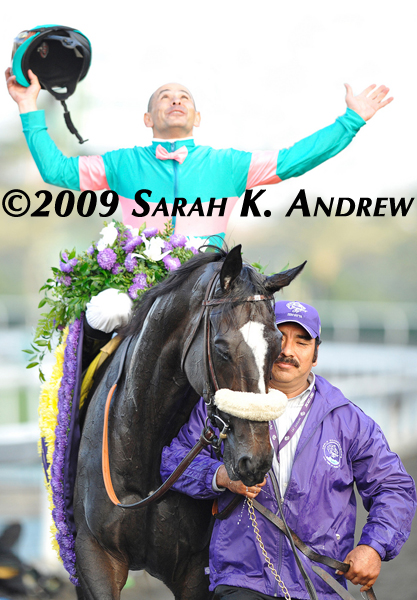


Older Male and Male Turf Horse: Gio Ponti


3-Year-Old Male: Summer Bird


Male Sprinter: Kodiak Kowboy


Female Sprinter: Informed Decision

2-Year-Old Female: She Be Wild

2-Year-Old Male: Lookin at Lucky

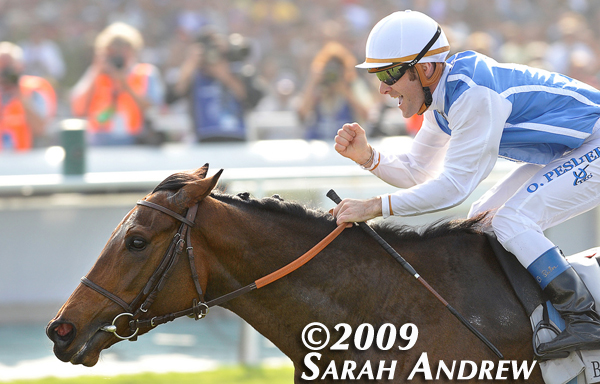
Female Turf Horse: Goldikova (Ire)

Owner: Godolphin Racing


Breeder: Juddmonte Farms


Trainer: Steve Asmussen

Jockey: Julien Leparoux

Now go read your TDN and browse your blogs to catch up on all the details!

Wizard Session 123: Slow as Molasses in January

Tuesday, 1/12/10
I did a session of ground schooling with Wizard today, starting with long line work and followed by longeing. I tacked him up in a surcingle and his regular riding bridle (Happy Mouth mullen D bit). I warmed him up on the long lines, practicing with me walking a little further away than in previous sessions. Wizard is pretty easy to long line when I’m on his left side but he’s rather squirrelly when I walk on his right side, just like when I longe him to the right. We walked to the left first in order to get him moving forward. Then, I halted him and asked him to yield to rein pressure and turn his head, first on the right, then the left. Then, I switched sides to his right. He began to spin his hind end away from me, but I gently asked him to bend his neck again to each side. I think it worked to keep him centered and relaxed. We then walked to the left (counter-clockwise) but with me on his right (I was walking along the wall). I usually long line him to the right with me on his right.
There were a few traffic cones in the arena so we practiced keeping him from crowding me by walking with the cone between me and him. He knocked one over but was able to navigate the rest of them. We also walked over a few ground poles. Forward and straight, forward and straight.
I fastened side reins on the loosest hole possible in order to mimic light rein contact. When his head was relaxed, there was no pressure on his mouth at all. I put the side reins on to work on relaxation rather than for any gymnastic purposes. To the left, he longed beautifully, stretching down and relaxing his topline. To the right, he was rushy and tense, breaking into a fast canter several times and propping/spinning. Gently, persistently, I got him to move out at a trot after a few tries. He trotted about 10 times in each direction- I was not longeing for physical exercise but for mental exercise. By the time we were done, he was a little sweaty, which is interesting because he can play/run at liberty without breaking a sweat. The long lining and longeing was clearly more stressful and challenging than when he free longes, even though he canters and gallops at liberty and only walked and trotted for in-hand work.
I have a bucket of Equi-Pride and I’m trying to get Wizard to eat it without thinking it is poison. The first time, I added about an ounce to his rice bran mash and he refused to eat it. Now I’m being sneakier, adding a good serving of molasses and only putting a spoonful or two of Equi-Pride into the rice bran. I’ve learned that picky eaters like Wizard (Alibar was the same) can learn to eat new things but the new things must be introduced gradually. He used to hate rice bran and now he nickers for it. He hears the jar lid on the molasses and I can feel his stare as I prepare his treat.
Speaking of molasses, you know that saying about being “as slow as molasses in January”? Spend a little time in a barn with a jar of molasses and you’ll understand why people say it.
Boredom, Boredom…

Due to weather and being busier than usual for this time of year, I have not ridden since Christmas. I’ve gotten a lot of photo work done, but my goodness am I ready to ride!
Wizard’s soles are feeling better but he is still very careful on hard ground. We are in the middle of a cold snap but I am visiting him regularly. I make sure he has warm drinking water, we do a little groundwork, and I let him play in the indoor arena. Slightly milder weather is expected later in the week so I’m hoping to at least take him for a hike in the woods this week.
Sarah K. Andrew: 2009- A Year in Photos
Happy New Year to all of my friends. I appreciate all of your comments and ideas. 2009 was another prosperous and thrilling year for me as a photographer. Some career accomplishments and highlights:
– photographed my first Kentucky Derby
– photographed 2009’s Rolex Three-Day Event
– had photos published in USA Today, Equus Magazine, Thoroughbred Daily News, a two-page spread in The Blood-Horse, and the cover of American Turf Monthly, to name a few!
– had fine art images displayed in restaurants and supermarkets
– rode a track pony and accompanied a Breeders’ Cup contender to her morning gallop
Click on any photo for more info…
Celebrating the New Year with Wizard

Wizard bouncing into 2009

I never tire of photographing Bryan the Cat

Partner’s Hero at Northview Stallion Station

Love of Money at Northview in January

The Thermals rocked the Bell House (click for review)

Haynesfield winning the Whirlaway on a chilly Aqueduct afternoon

Clancy the Pug in Jersey City

Mellowtraumatics, Milwaukees, Ben Trovato, and Small AM at Maxwell’s (review)

Matt McLaughlin and his Andalusian stallion Corral II at the 2009 PA Horse Expo (review)

Wizard and JR after a March snowstorm
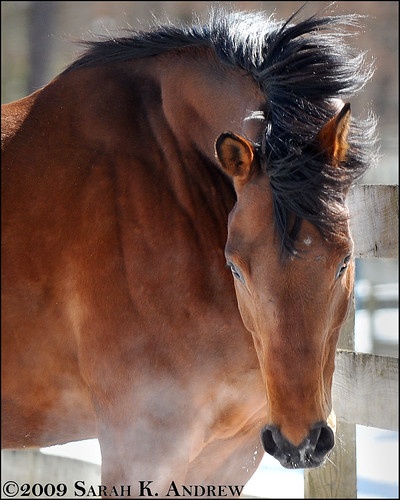

Gotham winners I Want Revenge and Joe Talamo (click for Joe Talamo’s favorite movies)

Trotting little fences with Wizard


Jonathan Andrew at Buddie’s Tavern

Joe Talamo and I Want Revenge win the Wood Memorial (blogged)


Mary the Easter Morgan
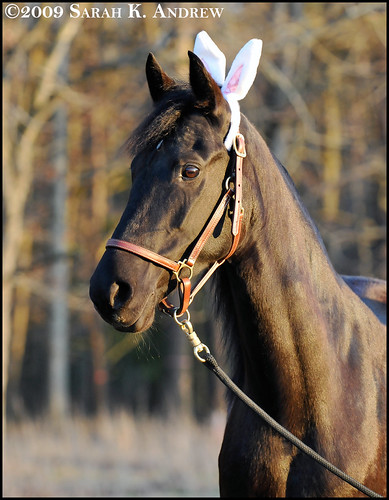
Wizard, looking shiny and fit


JR

Miss Tuesday

Mary

Riot the Border Collie (Quicksilver Q-Eye-It Riot, HXAs, TD, RN, FDCh-Gold)

And the sheep Riot herds

On to Kentucky!
Super-horse Cigar at the Kentucky Horse Park

Churchill Downs- Barbaro statue

Rolex 2009 (Phillip Dutton and Connaught)

Rolex 2009 (Sara Dierks and Somerset II)

Rolex 2009 (Jose Ortelli, Jr)

Friesan Fire and Cindy Jones

Friesan Fire

Claiborne Farm- Secretariat’s grave

Kentucky Oaks winner Rachel Alexandra
Zenyatta at Churchill Downs

Kentucky Derby 135: Calvin Borel and Mine That Bird

One rose salute in memory of Borel’s parents

Back to Jersey!
Jersey Fresh 2009 (High Society III and Jessica Hampf)

Jersey Fresh 2009 (Business Class and Maya Studenmund)

Jonathan Andrew in Asbury Park

On to Georgia!
Schuppernong Polo Club in Alpharetta, GA

Valley View Ranch in Cloudland, GA

Kat and Maggie

Tractor cats

New York, New York!
Gio Ponti wins the Manhattan
Summer Bird wins the Belmont Stakes


Summer Bird wins the Travers, aka Mid-Summer Derby
Summer Bird and Kent Desormeaux win the Jockey Club Gold Cup

Kiss the Kid and Channing Hill at Monmouth Park

Leslie Morse and Tip Top 962 at the Festival of Champions: Gladstone, NJ

JR clowning on the longe line

The day I made Holly Van Voast a star (blogged here)

Rachel Alexandra romps in the Mother Goose

Rachel Alexandra’s entourage

Finn the TDN Beagle

Yoshi the TDN Shiba Inu

Spice Route’s mad scientist blinkers

Presious Passion and Elvis Trujillo win the United Nations at Monmouth Park

Jonathan Andrew: Arrivals & Departures CD release party (review)

Rank at the Start: Delaware Park on Delaware Handicap Day

Oh Justin Time: silver grullo Paint stallion

Haskell Invitational showdown
Rachel Alexandra schooling in the Monmouth Park paddock

Born to Run: Rachel Alexandra and Calvin Borel win the Haskell
Bird’s eye view

Out of the gate at Saratoga!

Best seat in the house

Pony girl waiting in the rain at Monmouth Park

Fasig-Tipton Saratoga sale

Rachel Alexandra at Saratoga

Rachel Alexandra, post-bath

Portrait of Rachel Alexandra

Quality Road at Saratoga

Skorri, an Icelandic Horse at Moonlit Run Equestrian Center

Barefoot and bareback at Moonlit Run

Track pony at Saratoga

Mary the Morgan and her owner share a moment
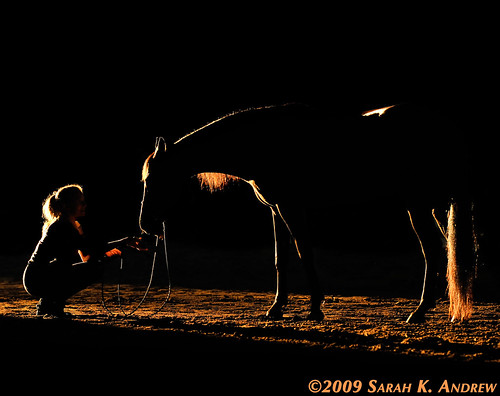
New York City mounted police

Rachel Alexandra’s Woodward victory

Calvin Borel and Robby Albarado: the victor and the vanquished

Rachel Alexandra after the Woodward

Harness racing at Saratoga Raceway

Here comes the sun

Saratoga sunrise

Saratoga ends and in rolls September…

Mary the Morgan- first show, reserve champion!

Dirge, a one-eyed steeplechaser at Monmouth Park (here’s his story)

Handicapping the 8th at Belmont Park

George Morris clinic at Persimmon Farm in Maryland

Selena and me

Hitting the trails with Wizard and Mary

Kiss the Kid before the Meadowlands Cup

Greetings from the Meadowlands

The Grey Ghost Starter Handicap- a Halloween race for grey horses at the Meadowlands

On to November and on to California!
Portrait of Zenyatta
Goldikova at Santa Anita
27 year old Turkoman at E A Ranches in Santa Ysabel, CA

Einstein at Santa Anita

Silver Swallow (the Silver Swallow adventure)

Zenyatta

Life is Sweet

Presious Passion

Zenyatta and Mike Smith
Champions! Zenyatta and Mike Smith
Back home to Jersey…
Barn Beauty Tip #39: Your Stirrup Iron can Double as a Mirror for a Lipstick Touch-Up

Selena

Selena and me

Paris

Imaging (Dynaformer – Gaze, by Danzig)

Atlas at Moonlit Run

Katie and Val at Moonlit Run

Slick the barn kitty

Lentenor, full brother of Barbaro

Mary the Morgan: Joie de Vivre

Paris and me

Wizard- portrait of a Thoroughbred

Jen and Mayberry- autumn portrait

“Mary” Christmas

Paris in the snow

Wizard in winter

JR and Wizard enjoy the snow

In memory of Kona Gold

In memory of Papi Chullo

In memory of Kingpin

In memory of Gun Rock

In memory of Sunriver

In memory of Go Between

In memory of Bailey Wick

In memory of Bobby Frankel, who trained some of the greatest horses I’ve ever seen, and whose barn was always the heart of Saratoga

And in memory of one of my all-time favorite racehorses, Lawyer Ron


Best Wishes for a happy and healthy 2010!
Sarah Andrew
2000-2009: Sarah Andrew’s Top Ten Albums of the Decade
#1. Death From Above 1979: You’re a Woman, I’m a Machine (2004). In the 1970s, the Rolling Stones got the job done as a quintet. Four Pixies ruled the 1980s. Nirvana stormed the 1990s trio-style. And in the 2000s, two Torontonians called Death From Above 1979 unleashed all the fury the decade could possibly handle. We’ll be down to a one-man show in the 2010s, I suppose.
Village Voice: I don’t get this.
#2. Unwound: Leaves Turn Inside You (2001). I don’t even know the titles of the songs. Never learned much about the band. For the duration of this 74-minute masterpiece, I know very little at all.
PopMatters: Unwound plays with a tightness and richness that few bands can touch anymore; they have turned into the metal Minutemen.
#3. Songs: Ohia: Ghost Tropic (2000). It’s a horse race of Alydar/Affirmed proportions to decide which Y2K Songs: Ohia release is better: The Lioness or Ghost Tropic. In the end, I’m an Alydar girl and Ghost Tropic wins by DQ via interference. The difference between the two albums is vast- The Lioness is easy to love and Ghost Tropic is more rewarding in the end.
Allmusic: “Everything moves as slowly as a three-legged dog, and anyone neither patient enough nor attuned to Molina’s style of songcraft (imagine Neil Young doing very mellow gypsy folk music) might very well be put to sleep.”
#4. The Rapture: Insound Tour Support Series Volume 19/Out of the Races and Onto the Tracks (2001). Before dance-punk was a thing, there was a really cool band called The Rapture. Before they got their act together and released the “Echoes” album, they had some really cool singles and EPs, including Out of the Races and Onto the Tracks and the Insound Tour Support EP. It was a bit of bad timing that kept their name out of people’s iPods, since their prime material and sound was never captured on a full-length. The essence of their best live material is on these two EPs.
Pitchfork: Jersey, of course, isn’t all ugly. It’s almost like New York sometimes. Likewise, New Jersey is what New York is always on the verge of becoming. Hundreds of thousands of Jerseyites stream in to the city every day, becoming part of the place for eight hours before shuttling back across the borderline. With a sound in constant, uneasy flux, the Rapture speaks (not always eloquently, but effectively) for the commuter– the ordinary-looking joe capable of blending into the Broadway crowds but forever holding a dirty secret in his irradiated little heart..
#5. Landspeedrecord! Road to Flight (2000). The boys from Baltimore first blew me away at local venues with their live set and then they followed through with their recordings, a rarity among DIY bands. And the album cover is a thoroughbred racetrack win photo! Rock and racehorses all the way.
PopMatters: Landspeedrecord! are caught somewhere between the new-wave cool a la Devo and punk brilliance. With as much contemporary influence to keep the sound modern, Landspeedrecord! also delivers enough unique style that will inevitably keep them out of the loop of “cool” with all the kids. For the listener, the key is to not overextend hisself or herself with effort to understand the wired sounds escaping the stereo, but instead to embrace them for what they are. Landspeedrecord! has come a long way, perhaps Road to Flight will take them to the more prosperous spot on the punk rock hill they deserve.
#6. Elliott Smith: Figure 8 (2000). The world lost a great talent in 2003. This was the last album released during his short lifetime.
Q Magazine: Most riveting are the ballads, where he conveys a devastating truth with conversational ease.
PS- I was at this show…
#7. Supergrass: Supergrass (2000). I admit that The Grass nabbed me with “Caught By The Fuzz” in 1994, but they really hit their stride and rung in the new decade in a decidedly non-Coco fashion with their eponymous LP. PS- I hate the word Britpop.
BBC: Too many reviewers concentrated on the rather tired vibe effusing the whole album, mistaking weariness for laziness. What Supergrass really represents is the consolidation of what In It For The Money had dared to let us dream: that this cheeeky Britpop trio had morphed into a truly world class band.
#8. The Breeders: Title TK (2002). Kim Deal is rock music’s Zenyatta. The Queen of Cool. All Wave, Steve Albini, Kelley Deal, all just contribute to her meteoric bossness.
Blender Magazine: Unfortunately, the songs on Title TK are mostly half-written train wrecks.
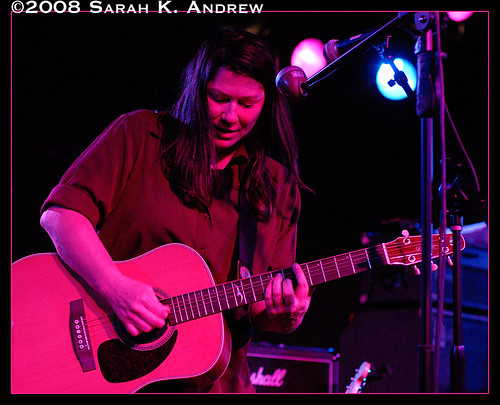
#9. The Thermals: F*ckin A (2004). Although their live set is nothing short of fantastic and their more recent releases got all the good press, I can’t deny the allure of their rowdy cousin.
cokemachineglow: Portland rockers the Thermal stand out as a lo-fi beacon of light in over-produced, uber-serious times. Whilst most rock has forgotten how to be fun, the Thermals remember the lessons of Robert Pollard and Lou Barlow and Kim Deal.

#10. Fugazi: The Argument (2001). Most of the time, I like the first or second album by a band more than any other album, but where Fugazi ended is where they just started to get it right.
New Musical Express: Whilst ‘The Argument’ still sounds unmistakably Like Fugazi, it’s the sound of an inspirational band, renewed, at play.
Monday, 12/21/09: Over two feet of snow blanketed parts of New Jersey this past weekend. The snow is miserable for travel but spectacular for equine photos :^) On Monday morning, the sun came out and I trekked to the barns.
Photo note: For a lot of these images, I exposed for the horses’ coats, which overexposes the snow a bit. I shot manually or in aperture priority, depending on the background. There is debate about photo exposure in the snow, but this is how I do it :^)
Wizard and JR are absolute snow bunnies and they put on quite a show for me.


Next, I drove to my friend’s barn. Before I could get to the barn, I had to rescue a car from the driveway with Blue Thunder, the trusty tractor.
Paris was not as rowdy as the boys, but she looked quite elegant as she pranced and spun in the snow.
Bella and Kara were as happy to trot around as they were to groom each other when we removed their blankets.


Robbie, a Thoroughbred, showed off his athleticism and good looks for the camera.

Last but not least is Selena, who looked more like an Arabian than a Thoroughbred with her curled tail and animated moves.


 Rock and Racehorses: The Blog